In our rapidly-moving world, it’s all too easy to get swept up in the nonstop grind of daily life. Maintaining productivity and overall well-being can often seem like a game of juggling flaming swords. You’d think constant work is the way to get more done, but that’s actually a myth. Tons of studies show that regular breaks are where it’s at for boosting energy, focus, and mental health.
Tiny Breaks, Big Impact
Small, regular breaks can be like little power-ups throughout your day. Just like characters in video games who need to pick up health packs, humans need these short rests to keep going strong. Think of your workday as a series of cycles, with each cycle being a period of work followed by a quick reload. This setup ensures you won’t burn out because you’re giving yourself multiple chances to reboot.
Take coding for instance. It’s super intense, right? Taking a 10-20 minute break every hour can be a game changer. During this downtime, stand up, stretch, or maybe even jump around a bit. It sounds silly, but these small activities can do wonders for your circulation and energy levels.
The Art of Balance
Finding that sweet spot between work and rest is key. Methods like the Pomodoro Technique (work 25 minutes, break 5 minutes) can be super effective. But hey, everyone’s different. What works for your friend might not be your jam, so feel free to experiment. Everyone’s got their own rhythm.
Signs You Should Hit Pause
Recognizing when you need a break can be tougher than it sounds, especially when you’re knee-deep in a project. There are telltale signs, though. Feeling stressed, frustrated, or just plain exhausted? These are red flags. Physical discomfort like back pain or eye strain are also big hints, as well as that stuck-in-the-mud feeling where nothing seems to move forward.
Break Time? Make It Count
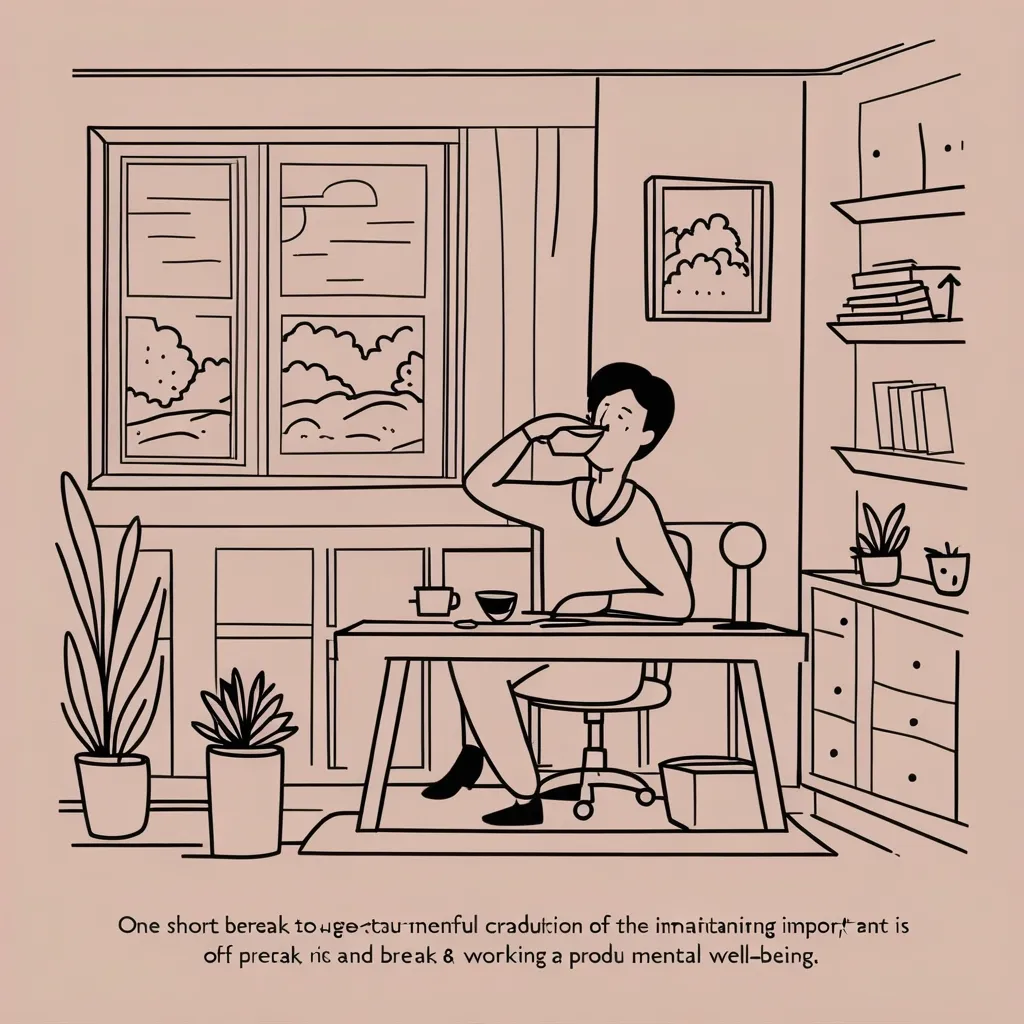
When you finally decide to take that well-deserved break, use the time wisely. Ditch the social media scroll; it doesn’t recharge you. How about a short walk? Some yoga stretches? Maybe just savor a cup of tea while staring out the window. Connecting with nature—even just a picture of a beautiful landscape—can really help chill out your nervous system.
Rituals For Recharge
Rituals can make your breaks more meaningful. How about a power nap? Make it a quick 20 minutes to avoid the grogginess of deeper sleep. Or maybe some quick meditation or deep-breathing exercises. These small rituals can clear your mind and recharge your batteries.
Stay Clear of Distractions
While breaks are crucial, distractions aren’t your friend. Binging TV or getting lost in social media can eat up your entire break (and then some). Instead, pick activities that are restorative. Light house chores, playing a musical instrument, or even sitting in silence can be incredibly refreshing.
Realigning and Recharging
Taking breaks isn’t just about resting; it’s also about coming back stronger. When you step away from your work, your brain gets a chance to reset. This can bring fresh perspectives and help you tackle tasks more efficiently. Whether it’s a tiny stretch break, a quick stroll, or a full-on vacation, stepping away helps you come back with more energy and clarity.
Easing Back Into Work
Transitioning back to work after a break has its challenges, but it’s manageable. Try setting a small goal before you take a break, something you aim to achieve right after you return. This keeps you focused. And seriously, avoid emails and social media during your break; they make getting back into work harder. Start with small tasks to regain your momentum and shake off any post-break fuzziness.
Takeaway
Regular breaks aren’t a luxury; they’re crucial for keeping yourself productive and mentally fit. Incorporating them into your daily routine can ramp up your focus, boost energy, and improve your mental well-being. Remember, rest isn’t the enemy of getting things done; it’s actually a key player. Next time you hit a wall at work, give yourself the green light to take a break. Your mind and body will thank you big time.