Forget everything you think you know about exercise. You don’t need a gym membership, a personal trainer, or a calendar blocked off for “workout time.” What you need is a smarter home — one that quietly pushes your body to move all day long without you even realizing it.
This isn’t about running on a treadmill at 6am. This is about designing your life so that movement is simply… built in.
Think about how much time you spend sitting still. At your desk, on your couch, waiting for your coffee to brew, watching TV. Most people spend between 9 and 12 hours a day sitting down. The human body was never meant for that. Our ancestors walked, squatted, carried, climbed, and crouched constantly — not in a gym, but just living their lives.
The idea here is simple: make your home work like that again.
What Exactly Is Passive Movement Architecture?
Here’s the short version. Passive movement architecture means arranging your home, your objects, and your habits so that small, gentle physical actions happen automatically throughout your day. No sweat sessions required. No motivation needed. Just smarter design.
The brilliant thing is that tiny movements, done dozens of times a day, add up. Research in what some physiologists call “non-exercise activity thermogenesis” — basically all the calories your body burns outside formal exercise — shows this kind of background movement can account for hundreds of calories daily and dramatically improve long-term health markers.
So let’s look at five ways you can build this into your actual life.
1. Replace Your Chair With Something That Makes You Work
“Sitting is the new smoking.” — Dr. James Levine
You’ve probably heard that quote before. But what does sitting actually do? It switches off your glute muscles completely. It shortens your hip flexors. It flattens the natural curve of your lower back. Over years, it quietly wrecks your posture.
The fix isn’t to stand all day either — standing in one rigid position is almost as bad.
The real answer is dynamic seating. A wobble stool looks like a bar stool with a curved base. When you sit on it, your core is constantly making small micro-adjustments to keep you upright. You won’t feel like you’re exercising, but your stabilizer muscles are working the whole time. Over eight hours at a desk, that’s a lot of quiet muscle engagement.
A kneeling chair is another option. It tilts your pelvis slightly forward, opens up your hip angle, and takes pressure off your lower spine. People who switch report less lower back pain within weeks.
Even just a basic wooden stool with no back support is better than a cushioned office chair with lumbar support, armrests, and adjustable everything. All those “support” features basically tell your muscles to stop doing their job.
Ask yourself: how many hours a day are you sitting in a chair that’s doing your body’s work for it?
2. Put Heavy Things in Inconvenient Places — On Purpose
This one sounds counterintuitive. We spend most of our time trying to make things easier to reach. The passive movement approach does the opposite.
Store your heavier pots and pans on a low shelf so picking them up requires a proper squat. Move your cast iron skillet to the bottom cabinet. Cast iron is heavy by design — a 12-inch pan weighs around 5 to 8 pounds — and maneuvering it through cooking builds genuine arm strength over time.
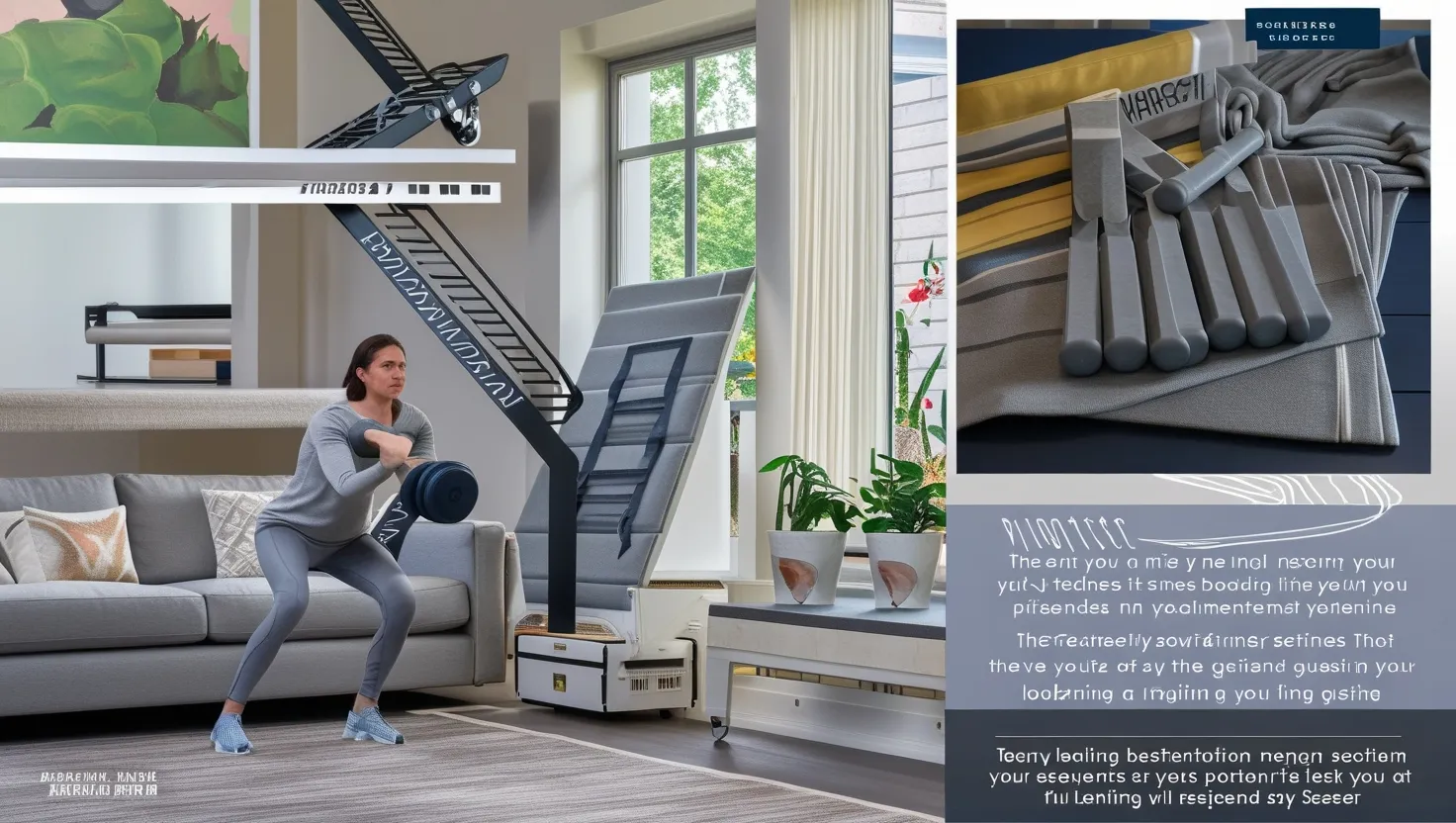
Keep a medium-weight kettlebell somewhere obvious — near the couch, next to the coffee table. Pick it up during commercial breaks. Do a single Turkish get-up while waiting for your pasta to boil. These aren’t workouts. They’re just… moments.
“The first wealth is health.” — Ralph Waldo Emerson
The psychology here is subtle but important. When exercise equipment is packed away in a cupboard or a spare room, the mental friction of getting it out is enough to stop you using it. When it’s already sitting there in plain sight, it becomes part of the furniture — and you interact with it naturally.
3. Design a Home That Forces You to Walk More
This is almost embarrassingly simple, but most people never think about it.
Where do you keep your phone charger? Probably right next to where you sit. Where is your water bottle? Arm’s reach. Where’s the TV remote? On the armrest.
Now, what if the charger was in another room? What if the water was in the kitchen? What if the remote was on the shelf across the room?
Every trip across the house adds steps. Steps add up. Ten thousand steps a day isn’t some arbitrary number — it represents a baseline of physical activity that keeps your cardiovascular system ticking, your joints lubricated, and your blood sugar regulated. Most people hit around 3,000 to 4,000 daily without thinking. Redesigning your space can push that number significantly higher without any conscious effort.
Install a pull-up bar in a doorway you walk through frequently — your bedroom door, your bathroom entrance, your kitchen. The rule is simple: one pull-up every time you pass through. One. That’s not a workout. But if you walk through that door ten times a day, that’s ten pull-ups you didn’t have to “schedule.”
Can you think of three items in your home you could relocate right now to make yourself move more?
4. Arrange Your Kitchen So That Cooking Is a Full-Body Activity
Most kitchens are designed for pure efficiency. Everything within arm’s reach, minimal movement required. That’s convenient, but it’s a missed opportunity.
Rethink your kitchen layout. Put things you use daily on higher shelves, so reaching is a genuine stretch. Store mixing bowls low, so you bend down to retrieve them. Keep your vegetable storage at the back of a low cabinet, so getting to it requires a real squat.
While you wait for water to boil, use the counter for incline push-ups. While stirring something on the stove, do calf raises. While the oven preheats, stretch your hip flexors against the counter.
None of this is dramatic. None of it requires changing clothes. But cooking a full meal this way instead of standing stock-still at a counter means your body has been moving consistently for 20 to 40 minutes.
“Take care of your body. It’s the only place you have to live.” — Jim Rohn
5. Use Visual Cues to Trigger Movement Without Thinking
The human brain responds strongly to what it sees. If your yoga mat is rolled up and stored in a cupboard, you will not use it. If it’s unrolled in the corner of your living room, you will step onto it every single day — almost on instinct.
This is how passive cues work. Leave a foam roller next to your desk. You’ll roll your thoracic spine during a phone call. Hang resistance bands on a doorknob. You’ll do a set of rows while waiting for something to load on your computer. Leave a lacrosse ball on your desk. You’ll roll your forearms, your feet, your glutes, throughout the day without scheduling a single session.
The goal isn’t to create a “home gym.” The goal is to make movement the path of least resistance.
What one object could you leave out right now that would make you move more tomorrow?
The Cumulative Effect Nobody Talks About
Here’s what happens over weeks and months when you do this consistently. Your posture improves because your stabilizer muscles have been quietly working all day. Your hip flexors stop being chronically tight because you’ve been squatting to pick up heavy pans and stretching through your kitchen routine. Your grip strength improves from the cast iron. Your cardiovascular baseline rises from the extra walking.
None of this required a single dedicated workout. No gym bag packed. No alarm set for 5:30am. No willpower required.
The body doesn’t care whether movement was intentional or incidental. It just responds to being used.
Passive movement architecture is simply about returning to the way humans have always lived — in bodies that move through the day — without waiting for a free hour that never seems to arrive.
Your home can either keep you still, or keep you alive. The difference is in the design.