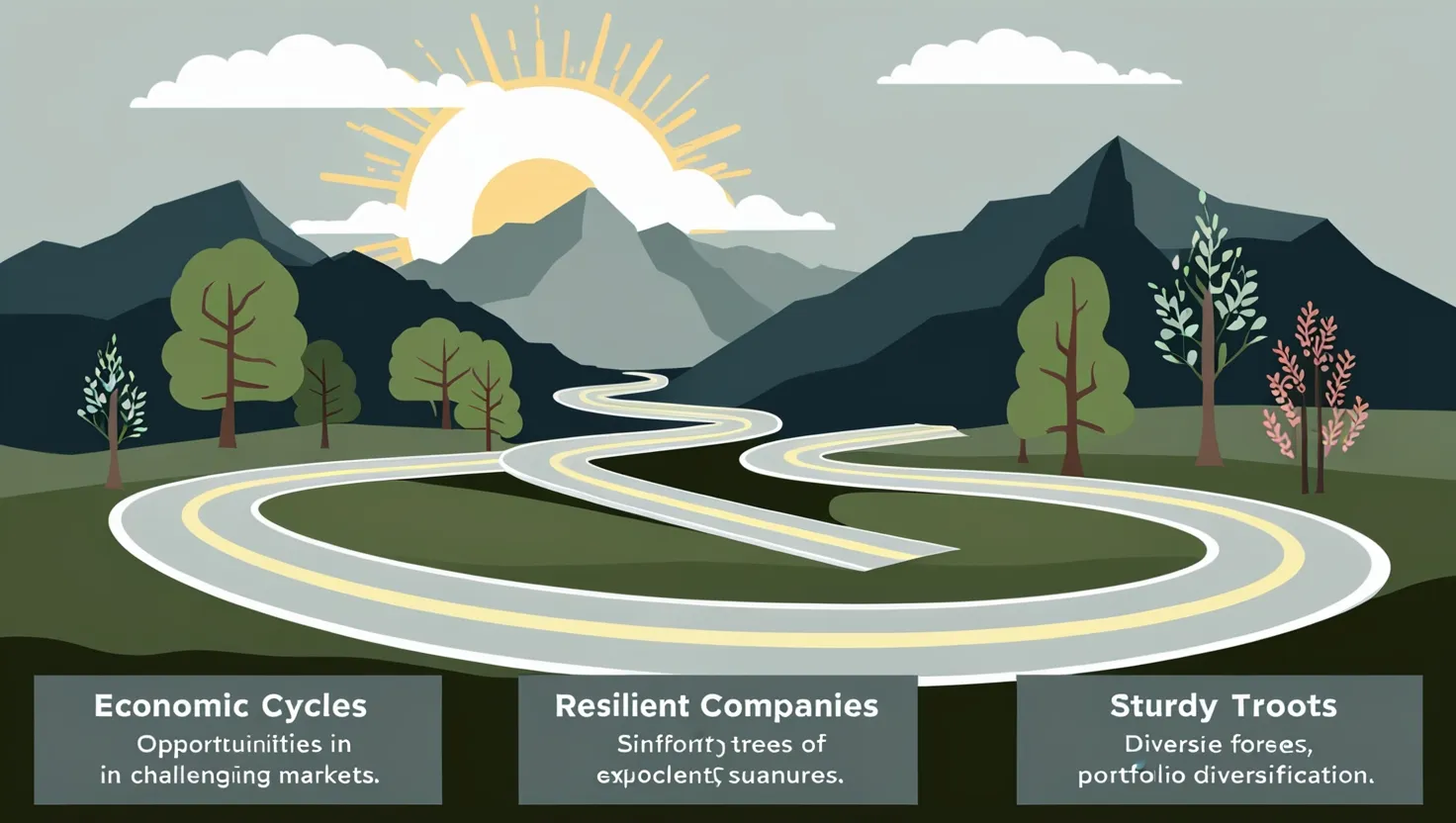
When it comes to value investing in cyclical industries, the landscape can be as unpredictable as it is rewarding. Cyclical industries, such as energy, commodities, and manufacturing, are notorious for their boom-and-bust cycles, making them a challenging yet intriguing terrain for investors. Here’s how you can navigate this complex world to uncover hidden gems and capitalize on the inherent volatility.
Understanding the Cycles
The first step in investing in cyclical industries is to develop a keen sense of the industry’s cycle. These cycles are often driven by macroeconomic factors such as economic growth, interest rates, and global demand. For instance, during an economic boom, industries like construction and automotive tend to thrive, while in times of recession, they may struggle.
Timing your investments correctly is crucial. This involves a mix of economic forecasting and a deep understanding of the industry’s historical patterns. By analyzing past cycles, you can identify potential inflection points where the market sentiment is about to shift. Buying during the trough of a cycle, when pessimism is high and prices are low, can be a lucrative strategy, but it requires a stomach for volatility and a long-term perspective.
Balance Sheet Resilience
Cyclical companies often face significant financial stress during downturns. To ensure that your investment can weather these storms, it’s essential to scrutinize the company’s balance sheet. Look for companies with strong cash reserves, low debt levels, and a history of prudent financial management.
A company’s ability to survive a downturn is often a testament to its financial health. For example, a company in the energy sector with a robust balance sheet can continue to invest in research and development, maintain its workforce, and even acquire distressed assets during a downturn. This resilience not only helps the company survive but also positions it for rapid growth when the cycle turns.
Management’s Track Record
The quality of a company’s management is paramount, especially in cyclical industries where decisions made during boom times can have lasting consequences. Evaluate the management’s track record of capital allocation through various cycles. Have they been prudent in their investments? Have they managed to maintain profitability even during downturns?
A management team that has successfully navigated previous cycles is more likely to make wise decisions in the future. This involves not just looking at their financial performance but also understanding their strategic vision and risk management practices. Companies with experienced and adaptable management tend to outperform their peers over the long term.
Cost Advantages and Operational Efficiencies
Companies with inherent cost advantages or operational efficiencies are better positioned to thrive in cyclical industries. These advantages could be in the form of lower production costs, superior technology, or strategic supply chain management.
For instance, a manufacturing company that has invested heavily in automation may have lower labor costs and higher efficiency compared to its competitors. Similarly, a commodity producer with access to high-quality, low-cost raw materials can maintain profitability even when commodity prices are low.
Identifying these cost advantages requires a detailed analysis of the company’s operations and industry dynamics. It’s about understanding what sets the company apart and how these advantages can be sustained over time.
Contrarian Thinking
One of the most powerful strategies in value investing is contrarian thinking. This involves going against the prevailing market sentiment and buying when everyone else is selling. In cyclical industries, this often means investing during times of industry-wide pessimism.
When the market is overly pessimistic about a particular sector, prices tend to be depressed, creating attractive buying opportunities. This is where the value investor’s patience and conviction come into play. By buying quality companies at discounted prices, you can set yourself up for significant gains when the cycle turns and market sentiment improves.
Applying Traditional Value Metrics
Traditional value metrics such as the price-to-earnings ratio (P/E), price-to-book ratio (P/B), and dividend yield remain relevant in cyclical industries but need to be applied with a nuanced understanding of the industry’s cycle.
For example, a company with a high P/E ratio during a boom cycle might seem overvalued, but if it has a strong track record of profitability and a robust balance sheet, it could still be a good investment. Conversely, a company with a low P/E ratio during a downturn might seem undervalued, but if it lacks the financial resilience to survive the cycle, it could be a risky bet.
Managing Risk
Investing in cyclical industries is inherently risky due to the volatility of these sectors. To manage this risk, it’s crucial to diversify your portfolio and maintain a long-term perspective.
Diversification involves spreading your investments across different sectors and geographies to mitigate the impact of any single industry downturn. Additionally, having a long-term perspective allows you to ride out the cycles, avoiding the temptation to sell during downturns and buy during booms.
Case Studies
There are several case studies that illustrate the success of value investing in cyclical industries. For instance, investors who bought into high-quality energy companies during the 2020 oil price crash were rewarded with significant gains as the sector recovered.
Another example is the automotive sector, where companies like Ford and General Motors have historically been undervalued during economic downturns only to rebound strongly when the economy recovers. These case studies highlight the importance of patience and a deep understanding of the industry’s dynamics.
The Power of Patience
Value investing in cyclical industries is not for the faint of heart. It requires a unique blend of analytical skills, contrarian thinking, and patience. The rewards, however, can be substantial.
By focusing on the fundamentals, timing your investments wisely, and maintaining a long-term perspective, you can uncover hidden gems in these volatile sectors. It’s about seeing beyond the current market sentiment and believing in the intrinsic value of the companies you invest in.
In the end, value investing in cyclical industries is a journey that demands both intellectual curiosity and emotional resilience. But for those who are willing to take the leap, the potential returns can be nothing short of extraordinary.