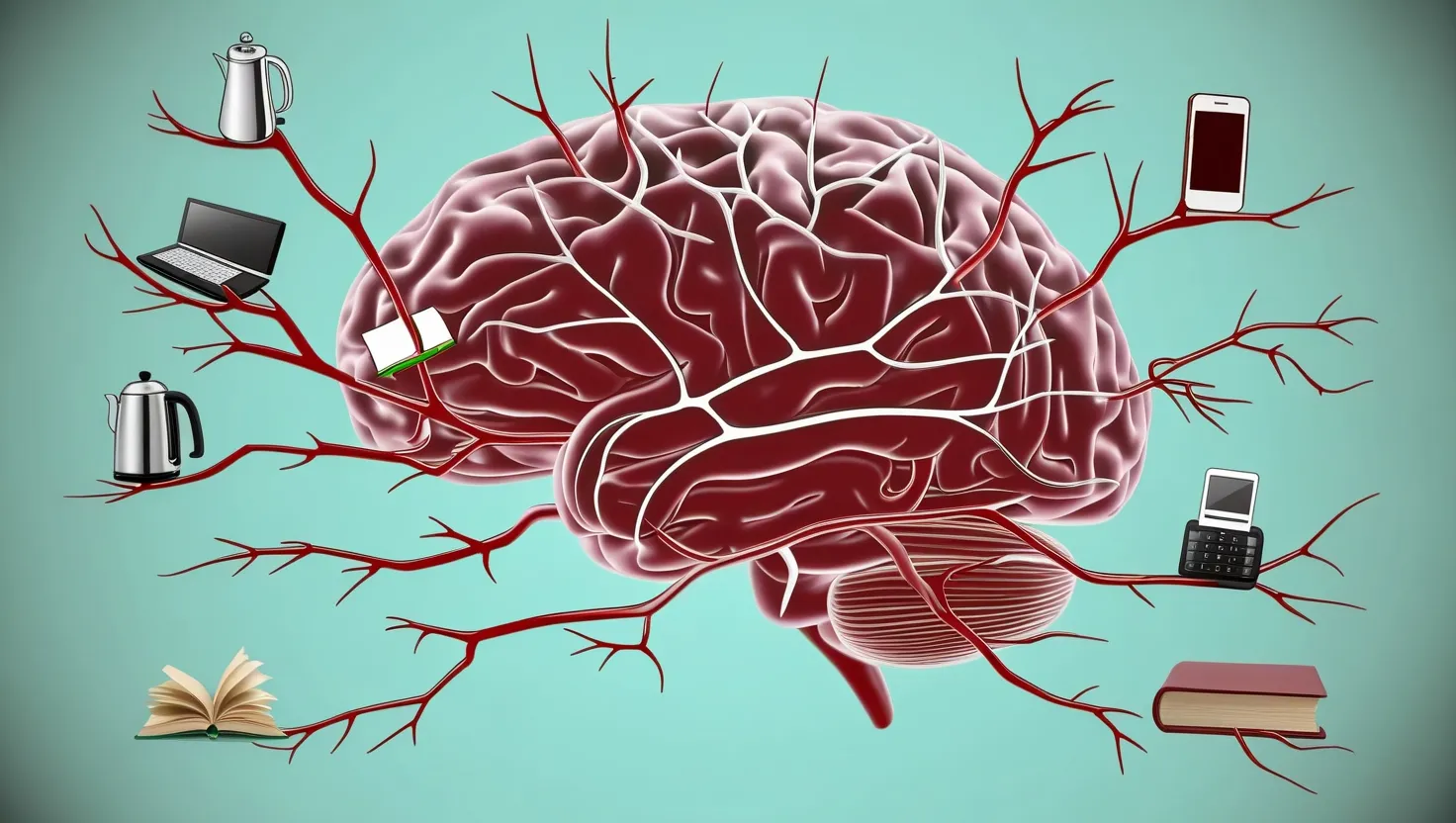
Most people treat their attention like a bad phone battery. It dies fast, feels unreliable, and you blame yourself. But your attention is not broken. It is badly designed. The good news: design can be changed.
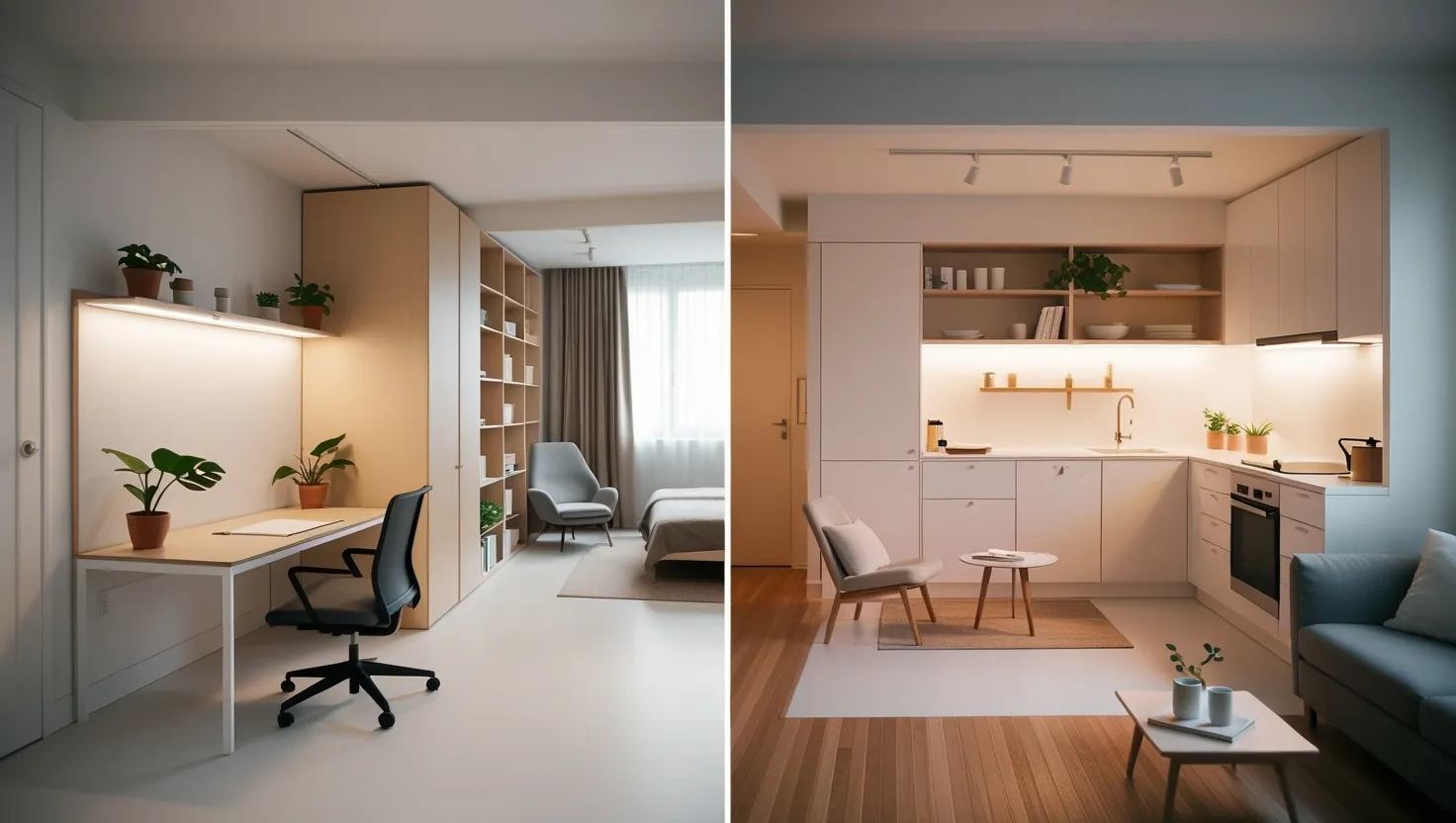
Think of your mind like a small studio apartment, not a giant mansion. If you throw things everywhere, even simple tasks become hard. But with a few clear rules and some smart “furniture” choices, that same tiny space can feel calm and powerful. That is what “architecting your attention” really means: deciding, in advance, what gets in, where it goes, and what it is allowed to do inside your head.
Let’s walk through five simple principles, one by one, in plain language. As you read, keep asking yourself: “How could I make this so easy that even tired, future-me can follow it without thinking?”
“The successful warrior is the average man, with laser-like focus.”
— Bruce Lee
First, I want you to see one big mental shift: the smartest way to live today is not to handle more information, but to filter better. You are not supposed to answer every message fast, read every article, or know every trend. You are supposed to build a system that protects what matters and lets the rest flow past without guilt.
Now let’s make that real.
Here is the first move: build simple “protocols” for how people and information reach you. That sounds fancy, but it is just rules. Clear, boring, lifesaving rules.
Ask yourself: if everything can reach me through every channel, how am I ever supposed to feel calm?
You can say:
Text = urgent.
Email = answer within 24 hours.
Shared doc or task app = non‑urgent ideas and projects.
The key is this: you decide the rule once, then follow it always. That way your brain stops treating every ding and buzz as a fire.
Imagine someone from work sends you a long idea on text. Under your rule, that is not allowed. You reply once: “Hey, long things by email please so I can give them proper attention.” No drama. No big speech. Just training people how to treat your focus.
Will everyone like this? Maybe not. But ask yourself: is my primary job to keep everyone happy in every second, or to protect my ability to do meaningful work and live a sane life?
Here is a simple test: next time your phone lights up, pause and ask: “Does this match the channel rule I set? Or am I letting other people rewrite my rules without my consent?”
You can also make “office hours” for certain channels. For example, email only twice a day, messages checked on the hour, social media after 6 p.m. At first it will feel weird, like stepping out of a fast current. Then it starts to feel like breathing.
“The ability to simplify means to eliminate the unnecessary so that the necessary may speak.”
— Hans Hofmann
Now let’s move from digital space to your actual physical space. This is where most people underestimate how much their environment bosses their attention around.
You do not need a new house. You need a few clear zones.
Think of three types of attention: deep focus, light browsing, and social connection. Now ask: where does each one live in your home or workplace?
For deep focus, pick one seat or spot that becomes your “serious work” place. In that spot, you remove anything that tempts you to break focus. No phone within arm’s reach. No social tabs. No TV in line of sight. You treat that seat like a library desk: when you sit there, your brain learns, “here, we do hard, single‑task work.”
For shallow browsing, you allow devices and quick checking, but away from your main work zone. Maybe a stool by a charger in the hallway, or the couch. That becomes the place where you skim headlines, watch short videos, or answer random messages. You are training your brain: “if I want to scroll, I move.” That tiny friction helps more than willpower.
For social connection, pick a place where screens do not rule. A kitchen table with phones off. A chair you use only for calls with friends. When you sit there, your attention is not split between humans and feeds. It is present.
Ask yourself: right now, does every corner of my space feel like “scroll anywhere, anytime”? If yes, your brain has no cues. No wonder it feels restless.
“We shape our tools, and thereafter our tools shape us.”
— Marshall McLuhan
Next comes your information diet. You would not eat from a random buffet all day and then wonder why your body feels bad. But that is exactly what many of us do with information. We snack all day, then complain we are mentally bloated.
I want you to treat information like food. You plan ahead, at least a little.
Once a week, take 10 minutes and decide:
What do I want in my mental diet this week?
Industry news? A book? A course? One long podcast? A few good essays?
Then give each of these a time slot. For example, 15 minutes of news after breakfast, 20 minutes of learning before lunch, 10 minutes of social updates in the evening. This sounds strict, but it is actually freeing. The goal is not to fill every minute. The goal is to stop “accidental consuming.”
Ask yourself: how much of what I read and watch is my choice, and how much is just whatever the app decides to show me?
Here is a small but powerful trick: pick one theme per week. Maybe “better writing,” or “sleep,” or “history of my field.” Then, when you find something random and tempting that does not fit, you save it to a list for later. Half of those saved things you will never miss again, and that is the point.
“Beware the barrenness of a busy life.”
— Socrates
Now let’s talk about output rituals. This is the part almost everybody skips. We read, we listen, we watch, and then we move on. That is like eating and never digesting.
To keep your mind clear, you need a habit of turning input into simple output.
After any meeting, article, video, or talk, I suggest you do one quick thing before you move on:
Write three bullet takeaways.
Or draw a tiny sketch of the ideas.
Or record a 30‑second voice note to yourself.
The form does not matter. The ritual does.
When you do this, you are sending a signal to your brain: “This mattered. File it.” You also learn faster, forget less, and feel less foggy. You close open loops instead of stacking them.
Ask yourself: how many things have I “learned” this month that I never turned into any kind of note, decision, or action?
You can also add a weekly closing ritual. Once a week, spend 20 minutes scanning your notes. Do not aim for perfection. Just see patterns. Maybe you keep writing about the same problem. Maybe the same idea appears from different sources. That is your mind telling you where it wants to go.
“Learning without reflection is a waste. Reflection without learning is dangerous.”
— Confucius
Now we get to something that feels strange in an always‑on world: planned disconnection. This is not about being a monk. It is about giving your attention a chance to reset.
Your brain works a bit like a camera. If you keep it in rapid‑fire mode all day, every day, the pictures get noisy. To get clear shots again, you need moments of stillness.
So I want you to put small “voids” in your day. Not giant digital detox weekends. Just small, regular breaks where you are not feeding on input.
A 20‑minute walk with no phone.
An hour cooking or cleaning with no background media.
Five minutes just sitting, noticing your breath and your body.
During these times, you are doing something important: you are letting your mind float, wander, and connect dots in the background. The ideas that pop up in the shower or on a walk come from this quiet space.
Ask yourself: when was the last time I was bored on purpose?
You might feel twitchy at first. Your hand may reach for your phone like a reflex. That is not a sign you are weak; it is a sign the system around you has been training you to never be alone with your thoughts.
Most people try to fix this by willpower. A better way is design. Put your phone in another room while you sleep. Use an old‑fashioned alarm clock. Charge your phone outside the bedroom. Keep one “no‑screen” activity ready for these breaks: a book, a puzzle, a notebook, a simple hobby.
“Almost everything will work again if you unplug it for a few minutes, including you.”
— Anne Lamott
Let’s connect all five principles now:
You define clear channels and rules for incoming requests, so not everything screams for attention at once.
You set up physical zones that tell your brain what kind of attention belongs where.
You plan a simple weekly information diet, so you are choosing what feeds your mind instead of letting algorithms choose for you.
You use output rituals to turn input into something stored, clear, and useful, instead of letting it swirl around as noise.
You schedule disconnection so your mental “battery” can actually recharge, instead of trying to run forever on low power.
Taken together, this is architecture. You are not fighting distraction one notification at a time. You are re‑designing the building your attention lives in.
Here is a blunt but helpful question: if a stranger looked at my calendar, my apps, my desk, and my habits, would they be able to guess what I say my priorities are?
If the answer is no, then your real life and your claimed goals are out of sync. That mis‑match is where a lot of stress comes from.
You do not need to fix everything at once. Start tiny. For example:
This week, choose just one chair as your deep focus spot and remove distractions from it.
Choose one clear rule for messages, like “no work replies after 7 p.m.” or “long ideas by email only.”
Add a 10‑minute “synthesis” block after one regular meeting to write three takeaways.
Add one 15‑minute phone‑free walk to your day.
Even one of these, done daily for a week, will teach you something about how your attention really behaves when given a better structure.
“What you do every day matters more than what you do once in a while.”
— Gretchen Rubin
You might still be thinking, “But I am just bad at focus.” I want you to challenge that thought. Maybe you are not bad at focus. Maybe you are living in an attention setup that almost guarantees failure.
Children focus for hours on games they enjoy. Adults can sit with a close friend and forget their phone. You already have the capacity. The issue is context.
So instead of asking, “Why can’t I focus?” try asking, “What about my current architecture makes focus so hard?”
Too many open channels?
No clear physical zones?
Constant random information snacking?
No habit of turning input into output?
No real breaks from stimulation?
Bit by bit, you can redesign each of these. You do not need special talent, expensive tools, or perfect discipline. You need a handful of simple rules, applied consistently.
And remember: the aim here is not to become a productivity robot. It is to build a calmer mind that can choose what to care about and what to ignore.
In a world that is always shouting for your attention, being able to say, “This matters, that does not,” is not just a skill. It is a kind of quiet power you give yourself.
What is one small change you can make today that your future attention will thank you for tomorrow?