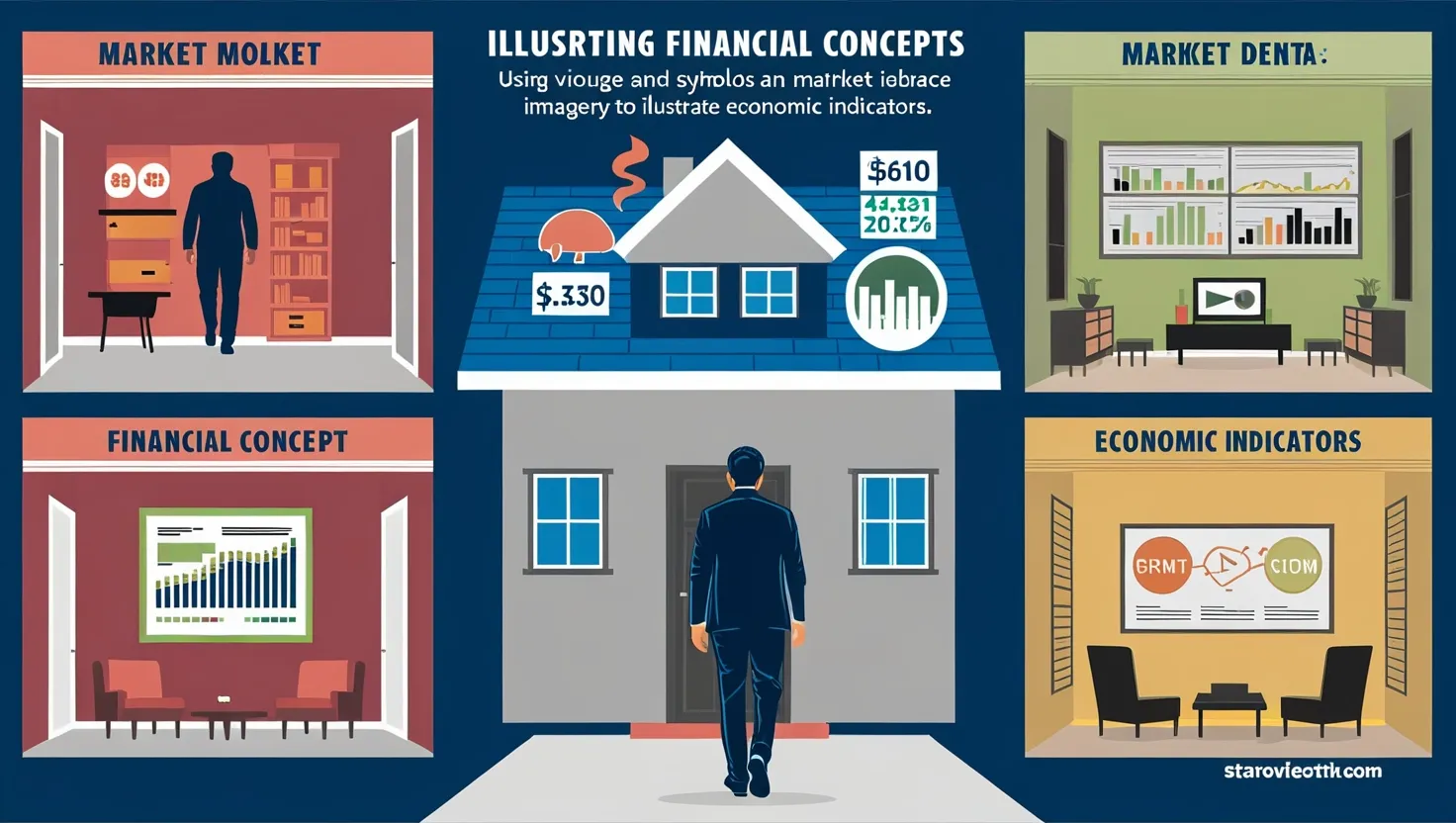
In the realm of financial analysis, the traditional tools of spreadsheets and charts can often feel dry and overwhelming. However, there’s a powerful alternative that can transform your mind into a dynamic, interactive database: the memory palace technique. This ancient method, also known as the “method of loci,” has been used for centuries to memorize vast amounts of information, and it can be remarkably effective for complex financial analysis.
Imagine walking through your home, each room meticulously decorated with vivid scenes that represent different market sectors, stock performances, and economic indicators. This is not just a visualization exercise; it’s a systematic way to encode complex financial data into your long-term memory, making it easily retrievable and highly memorable.
To start building your mnemonic market palace, you need to select a familiar location. This could be your home, your office, or even a route you frequently take. The key is to choose a place that you know so well you could navigate it with your eyes closed. Once you have your location, draw a simple floor plan or map out the route. This visual aid will help you plan your mental journey and ensure it is linear and logical, avoiding any dead ends that could confuse your mental path.
Next, identify the specific pieces of information you want to remember. For example, if you’re analyzing the tech sector, you might associate Apple’s stock performance with the kitchen sink in your home. Here’s how you can make this association more memorable: imagine washing an iPhone in the sink, complete with soap suds and water splashing everywhere. The more vivid and exaggerated the image, the better it will stick in your memory.
This technique leverages the brain’s strong visual and spatial memory centers. By associating abstract financial data with concrete, familiar locations and objects, you create a robust network of memories that are easier to recall. For instance, if you need to remember the current inflation rate, you could visualize a giant balloon inflating in your living room, with the rate written in bold numbers on the balloon.
One of the most powerful aspects of the memory palace technique is its ability to handle large volumes of information. You can divide your home into micro and macro areas, each section dedicated to different types of financial data. For example, the living room could be for macroeconomic indicators like GDP and inflation, while the dining room could be for specific stock performances.
To make this system even more effective, use the principle of spaced repetition. This involves revisiting your memory palace at increasingly longer intervals to reinforce the associations. Each time you walk through your mental journey, the connections between the locations and the financial data will become stronger, making it easier to recall the information when you need it.
Combining the memory palace technique with other mnemonic methods can further enhance its effectiveness. For instance, you can use the linking method to create a chain of associations within your memory palace. Imagine a character, like a superhero, moving through your home and interacting with the various objects that represent different financial metrics. This character could throw a drill at a spaceship in the living room (representing a tech stock) and then move to the kitchen to wash that iPhone (representing Apple’s stock performance).
The beauty of this method lies in its flexibility and personalization. You can tailor your memory palace to fit your unique needs and preferences. If you’re analyzing a specific industry, you can create a dedicated room or area for that sector. For example, the bedroom could be for the healthcare sector, with each piece of furniture representing a different company or metric.
In practice, this technique can revolutionize how you approach financial analysis. Imagine being able to recall intricate market relationships and spot patterns that might be missed in conventional analysis simply by walking through your mental palace. This isn’t just about memorization; it’s about creating a living, breathing story out of dry data.
For instance, if you’re trying to understand the impact of interest rates on different sectors, you could visualize a character adjusting the thermostat in your home (representing the central bank adjusting interest rates) and then see how this action affects various objects in different rooms. The thermostat could make the balloon in the living room (inflation rate) grow or shrink, while the iPhone in the kitchen (tech stock) starts to glow or dim.
This method also helps in predicting financial trends. By associating historical data with specific locations, you can mentally replay past market behaviors and see how they might influence future trends. It’s like having a historical archive of financial events right in your mind, ready to be accessed at any moment.
Incorporating active recall strategies further enhances the effectiveness of your memory palace. Instead of just passively reviewing the information, actively try to recall it from memory. Quiz yourself by mentally walking through your palace and seeing if you can remember the associated financial data without looking at any notes.
The science behind this technique is rooted in how our brains process information. By integrating multiple sensory modalities—such as visualization, association, and spatial memory—you tap into different areas of the brain involved in memory. This multi-sensory approach strengthens the connections between neurons, making the information more durable and easier to retrieve.
In conclusion, transforming your mind into a mnemonic market palace is a powerful way to analyze and remember complex financial data. It turns abstract numbers and trends into vivid, memorable scenes, making financial concepts not just understandable but unforgettable. By leveraging this ancient technique, you can enhance your ability to perceive, process, and predict financial trends, turning your memory into your most valuable analytical tool. So, take the first step today and start building your own memory palace—it could be the key to unlocking a new level of financial insight and success.





![Why Family-Controlled Companies Outperform: A Value Investor's Guide [2024 Analysis]](/images/585b62f3-7888-46c1-8896-556267cb9f33.webp)